The World Champion of All Time

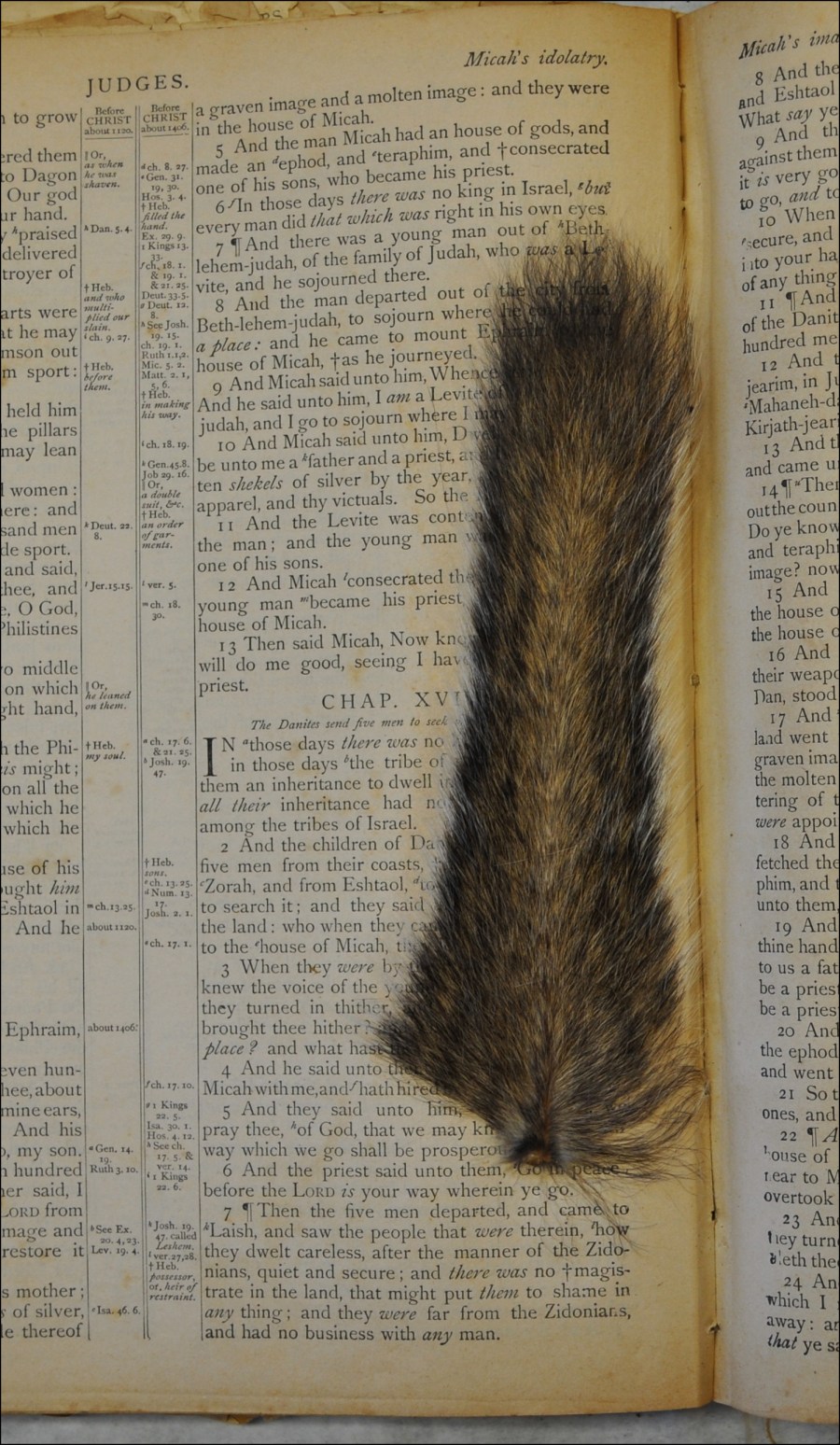
I found the all-time, world-beater, champion of inclusions in an antique family bible. I’ve found all sorts of things in bibles, and I thought I had seen it all. How wrong I was. I challenge my fellow book restorers: have you ever found anything stranger than THIS in any book?

Squirrel

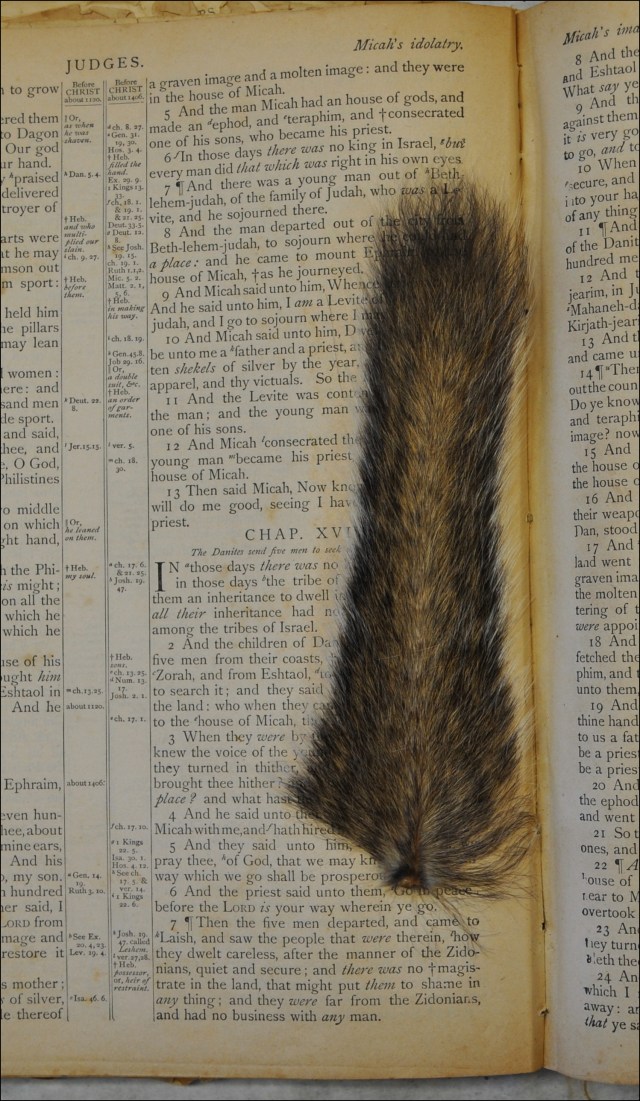
A SQUIRREL TAIL. A very flat squirrel tail. And a small one – I guess squirrels were smaller in the 1800s.

Can you top this? Throw down!

WTF: What’s This For?


image
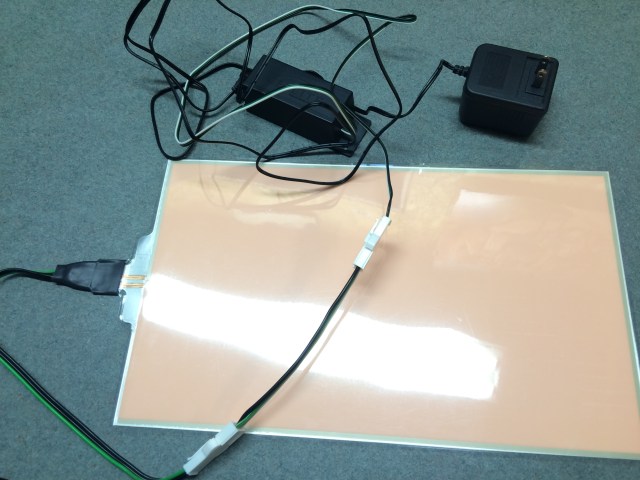
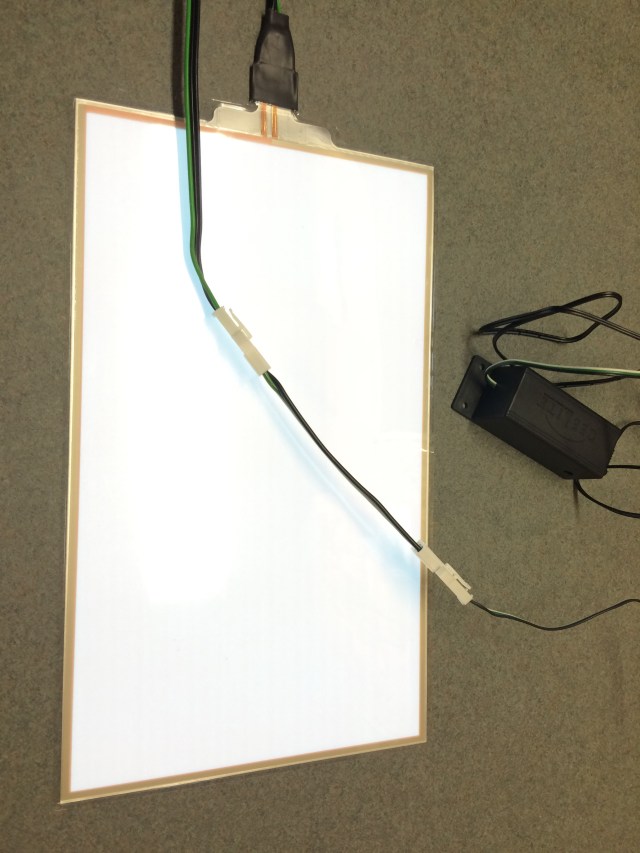
This was an Xmas gift from the darling. I had no idea what it was. Then I plugged it in …..

image

It’s a light! He got it from Talas. It’s an electroluminescent panel, thin as a piece of aluminum shim stock, that lights up. I have the big light  box for mending papers that are out of the books – but this can slip right between the pages for repairs in situ. Stays cool and everything. The construction is a little kludgy – there’s a bulky adapter in the middle of the wire that’s just there to change the relative positions of the wires, and it goes from heavy gauge to thin for no reason, and the plug on the wall wart doesn’t fit all the way into the power supply. No problem – I can take out the connectors and solder up the wires or reconnect them, and I think there are about five thousand spare old wall warts hanging around. Now I just have to get back to work and find some torn pages to mend …

Framed! WOOT WOOT!

Frame

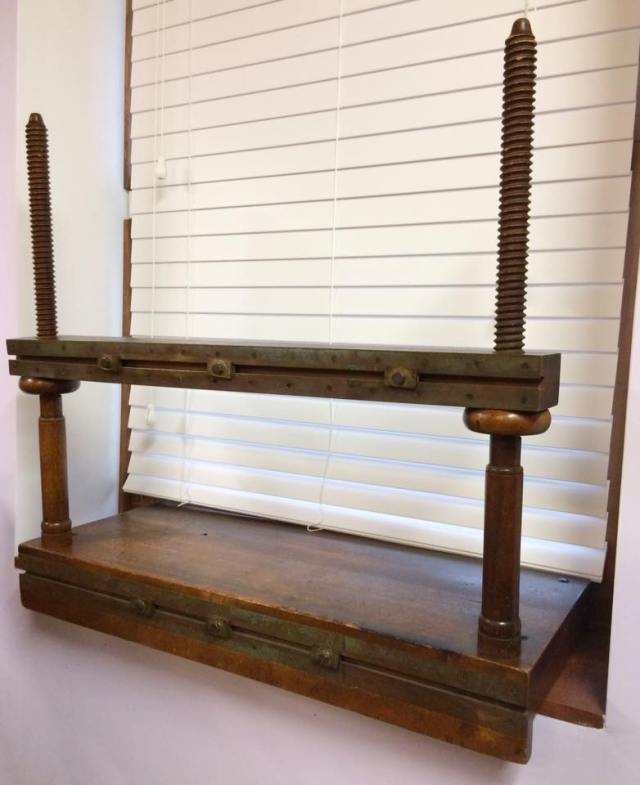
Look what I got! A beautiful W.O. Hickok Blank Book Sewing Bench! I would say that I bought it, but the person charged me such a small amount it’s partly a gift. I never saw one before I took it out of the package and assembled it on my counter.

Now I just need some big honking books to sew on it. It seems to be nearly original – does anybody know where to get some additional clamps?

The same person let me pick up some other items at the same time, and I will probably need to sell bits and pieces to help defray the damages my checkbook incurred.

Shout out to Jeff Peachey who corrected me when I wrote that it was an “edition sewing frame”. No wonder it was hard to find good pictures online.

Adhesives Bookbinders Can Dig

Someone asked me a question about PVA vs. EVA, and I didn’t know enough to answer. I researched a bit and came up with some intelligent sounding words, but how correct am I? I’ll be grateful, grateful for corrections and additions.

PVA vs. EVA – what’s the difference? Which is better?

Both PVA and EVA are synthetic adhesives. Both are made of acetate compounds suspended in a carrier. Both “cure” by forming long chains of molecules. “Heat cure” or “thermoplastic” or “heat set” adhesives require heat to cure. “Cold” or “cold set” adhesives cure when the carrier evaporates allowing the molecules to come in contact and react.  Some adhesives react when exposed to air. “Gorilla Glue” is a type of glue that cures when exposed to air and water. It’s important to know the differences so  you can select the correct adhesive for your application.

People often speak of allowing PVA to dry, but that’s not correct. The material doesn’t so much dry as react to form a different material that is a solid instead of a liquid, although there are probably some carrier/solvent materials that do evaporate.

Many forms of PVA exist with different names. “Jade” is one of these. PVA  is polyvinyl acetate, a type of plastic. Formulations include the various Jade-named products, common “white glue” products such as Elmer’s, and woodworking glues. If it’s white and liquid, it’s probably some form of PVA.

PVA adhesives are composed of molecules that link together (polymerize) to form a (usually) flexible long-chain resin (polyvinyl alcohol) and acetic acid. I don’t know why they are called “acid free”. Maybe because there is no acid in the uncured product? Maybe the acetic acid released during the curing stage evaporates? Most PVA used in bookbinding  (Lineco, Jade 402) is a strong adhesive that sets up fairly quickly. PVA is not usually soluble in water once cured. 

Bookbinding PVA should be considered irreversible. If you glue up a book spine with PVA, you will have the devil of a time getting that glue off in the future if the book ever needs rebinding. This may not be a problem when making an inexpensive journal, notepad, box, or slipcase because you’re not likely to want to peel the paper or cloth or leather off the board in the future.  Also, PVA doesn’t have much water in it, so it doesn’t cause as much cockling of paper or of paper-backed bookcloth as paste does.

PVA is great for adhering bookcloth to boards. To prevent cockling (on paper-backed cloth) and seep-through (on plain cloth) I like to use a roller to apply the glue quickly. I bought a small, thin paint roller designed for painting behind toilets and a thin white foam roller. Squirt some glue in a shallow tray, make sure there’s not too much on the roller, and go to town. Fast! Easy! But impossible to clean the roller, I find. I keep them in the freezer or fridge, tightly wrapped in something that won’t stick to the glue. I find that heavy freezer bags work well, and by putting a straw in the corner of the seal I can pull  most of the air out of the bag as well. I don’t do that much glueing, so I don’t bother with a roller unless I’m doing a few books. 

PVA is also great for making boxes – it sets up quickly and makes a strong bond to join walls to bases and to cover the boxes. I found that it made a good strong flat laminated board, but then if I had to sand the edge of the resulting layered board the glue layer was a problem. Paste doesn’t create the problem, but it takes longer to dry, and if you have different thicknesses of board the paste will pull the board into a curve as it dries. Is nothing simple? Are bookbinders simply incapable of giving straight up, yes-no answers? It’s like a darn philosophy class in here.

I think it’s not a crime to use synthetic adhesives on cookbooks, which can be subjected to hard use (by forcing the spine open) or exposed to organic contamination or moisture. The PVA is very flexible and can tolerate lots of abuse, and the cured adhesive resin isn’t delectable to fungi and insects. 

The quick-setting nature of PVA can be a disadvantage. If you add just a small amount of starch paste to PVA, it will give you a much longer “open time” before it sets up. This is usually enough time to reposition materials and fuss with corners a bit. Some bookbinders claim that the addition of paste makes the PVA reversible. It makes sense that paste might cause the PVA to form shorter “chains” as it cures, but I can’t give you any proof one way or another. Paste does spoil, and PVA/starch paste “mix” will spoil, so I don’t make up much of that at a time. Methyl cellulose gel is not as strong an adhesive as starch paste, but it doesn’t seem to spoil, so making mix with MC is a good idea. You can mix up a larger amount and keep it handy for quite some time before it becomes runny, and then throw it out because your time is worth more than used mix. 

EVA is an oversimplification. EVA stands for ethylene-vinyl acetate, which is another polymerizing compound. It’s similar to PVA but is more often formed into a phenomenal array of sticky, flexible, hot melt, or foamed plastics. Most formulations are inert and non-toxic. There are many different uses for EVA compounds – cling wrap, athletic shoe soles or cleats, foam insoles, padding materials, hot melt glue sticks, drug delivery formulations – too many too list here. 

Bookbinding EVA is specific product called Evacon-R. I don’t know of any other brand-name formulations. Evacon-R is reversible.  Since Evacon-R is a special purpose formulation, I can’t find as much in the literature regarding longevity tests, strength, reversibility, etc. compared with PVA. The link below is to a forum post in the Conservation Online archives (a wonderful resource) with the earliest mention I found of Evacon: 

http://www.cool.conservation-us.org/byform/mailing-lists/cdl/2001/1031.html

A newer posting confirms the reversibility of Evacon-R: 

http://thebookandpapergathering.org/2015/06/05/course-review-adhesives-and-their-application/

I get Evacon-R from Conservation Resources, since I live in the US. It’s more readily available in the UK, I believe.

http://www.conservationresources.com/Main/section_34/section34_14.htm

Other polymerizing adhesives: are legion. Gane Brothers sells something they call “53S” that adheres to almost anything, including pyroxylin-coated bookcloth such as “imitation leather” and vinyls. I sometimes make semi-limp cases for personal bibles with imitation leather – NOT “bonded leather” which shall be mentioned no more – and 53S is the only thing that will form good bonds on round or folded corners or adhere labels to the imitation leather. There are adhesives go on hot and cure when they cool, so they are very convenient for large commercial binderies. I find that these thick hot-melt glues, often found on spines of modern  perfect-bound books, almost always become inflexible and brittle over time. Avoid them in your hand binding work.

Exception: modern conservation “heat set” repair tissue has a very small amount of heat-activated adhesive which is normally reversible in alcohol. It can be very useful for repairs on modern, hard paper where it forms a thin, nearly invisible bond. BUT … over a long period, there is a risk that the polymers or breakdown products could migrate into the paper, so I would never recommend using such products to repair valuable or older books. The repair is very conspicuous on older, softer paper. Paste and paper make for a much more attractive repair on softer paper, and are very easily removed with water when the time comes. They do not create any breakdown products or migrate into the paper.

Bottom line? PVA is works very well for some applications. It should never be used where there is any chance the adhesive might need to be removed in the future. Evacon-R seems to do everything that PVA does, and has the advantage of being reversible and of emitting fewer smelly/toxic compounds. Don’t use it where the work might be exposed to moisture.

While I’m thinking about adhesives …

Starch paste is a little trouble to use – you have to mix it up or cook it, it spoils quickly, takes longer to dry, and can introduce moisture into a book that might cause problems with water-soluble inks or dirt (tide stains could result). But paste has one great advantage – it can be easily removed with water. It forms a strong, flexible bond when dry. It’s cheap. Dry starch powder (rice, wheat, etc.) keeps almost forever on the shelf. I prefer to use paste whenever I can.

Paste will “pull” boards. If you use paste to bond a thin piece of board to a thick one, the thin one will pull the thick board toward it, bowing the board slightly. I don’t know the exact reason why – I suspect it’s a combination of the water in the paste migrating into the board and causing it to expand. The moisture will penetrate further into a thin board. When you paste the two boards, thin and thick, then put the together and let them dry, the thin board has a bit further to shrink back to original size, and the adhesive bond is strong enough to pull the thick board around as it shrinks, forming a curve with the bowl of the curve facing the thin board. You can use this to your advantage. I like to have the covers of a hardbound leather book curve ever so slightly so they “cup” the book. It’s not that extreme a curve, but you get the idea – it’s better to have the board wrap lovingly around the text block than to have the corners and fore-edge flaring outward. If you are covering a board with paper to get a smooth surface under an inlay, you want to be sure to put the same paper on the other side of the board so it doesn’t warp. An extra paper lining on the inside of a board helps counteract the pull of leather on the other side. If you will be filling in the center of a leather-covered board (the area between the turn ins) you might want to put a thin paper on the outside, before you put the leather on, so that this card doesn’t pull the board too much to the inside. That’s a lot of words to describe something simple, but a bit of experimenting will show you how your materials work. 

Paste is tasty starch, and it will spoil once mixed up. I spray Lysol in the jar and under the lid before I fill it with cooked paste, keep the plastic lid on the jar, keep the jar in the fridge and just scoop out what I need into a separate container. When it turns runny or stinky, it’s safe to toss into the compost. I wash jars – pint canning jars with plastic Ball lids work great – well after use, and alternate clean jars so I can run the dirty ones through the dishwasher to sanitize them. Once paste-eating goobers establish themselves in the jar, they grow faster and faster, so you really want to keep them out. 

I also keep a jar of thick methyl cellulose gel on the shelf. It keeps almost forever. It’s not as strong as paste, so I don’t use it for repairs much. It’s perfect for making “mix” (PVA with paste) as the resulting mix doesn’t spoil for a long time. Or ever.

One thing I’d like to experiment with are flexible  “fish” and “hide” glues – made of isinglass, hooves, or hides (such as rabbit skin) that are dried into crystals. When these are reheated with a bit of water, they form a glue that sets up instantly as it cools. Some old books with hide glued spines are still very solid, and sometimes the dried glue has become brittle and flakes right off. Some bookbinders add sugar in the form of honey or glycerine to hide glue to make it flexible, and you can purchase “flexible hide glue”. Hide glue gets between signatures and forms a very good bond, even if it cracks off the back. I’ve spent a lot of time getting old brown glue off old book spines, and I respect it. It gets a bad rap – maybe because it’s stinky when you take it off, it’s trouble to use, and it’s old fashioned. It has some great advantages, though. Spines glued up with hide glue can immediately go on to the next process without taking time to dry. I’m thinking springbacks and ledger books, which used to be made in large quantities. Pastedowns stick instantly with no cockling. But it’s unforgiving if you make a mistake.

This Just In – Exciting Guest Advice! A master bookbinder has contributed some meritorious words about hide glue, which I will quote here:

————————–

I use hide glue often.  The brittleness you refer to can be cut not by honey or sugar, but by glycerin. This will keep it flexible and you can experiment with how much you want to add.  Glycerin will break down if the general pot of glue is overheated, as hide glue can take a higher temperature and still keep its properties.  The hide glue I use and the glycerin produce a dark tan glue.  If overheated, the color gets very dark brown and should be discarded.

… Hide glues and paste form gallons for the cost of a small quantity of PVA and, as you suggest, hide glues and paste are relatively easy to store with a very long shelf life.

In my opinion, PVA has limited uses such as in box making.  Otherwise, you simply have to weigh your time in using paste to the cost of using PVA.  A little experience will help you understand the pulls of paste (thin pulls thick) and you can balance your materials appropriately. Again, if you add a few drops of glycerin to a pint of paste, it will help keep it flexible and there will be less “pull.”

PVA is a recent invention.  For hundreds of years binders used paste and hide glues and mastered the question of pull and warping.  Not much reason to change as far as I can see.

Sam Ellenport

————————

Now I really want to play with hide glue. I was told that I could get a small pot, such as the type used by calligraphers, and melt down scraps of parchment in a small amount of water to make my own glue. On the other hand, commercial formulations are available, and it might behoove me to learn using a known material before branching out. Stay tuned!

Spoilage and shelf life:

Uncured PVA can spoil. There are various types of fungi, molds, yeasts, etc. that eat it. Some PVA has anti-fungal stuff (such as thymol) added to prevent this. There was an outcry(thymol turns out to be a carcinogen), and much of the bookbinding glue no longer contains preservatives. Paste spoils. MC eventually can spoil. Hide glues spoil. 

I deal with this by never dipping anything into the “mother jar” of adhesive. I pour out of the gallon jar of PVA into a quart jar that I keep on the shelf, and I pour out of the quart jar into a squeeze bottle. Squeeze bottles are great – I can scribble a luxurious amount of glue wherever you want and then spread it out by dabbing/brushing or by rolling with a small roller. Sometimes I drop the PVA from the bottle onto the brush if I just need a little. This way, any contaminants that might be on a brush or tool don’t work their way back up the chain. I have kept PVA for years without noticing any degradation – I just shake up the bottle before decanting, as there is a slight bit of settling. I’ve not seen any mold or visible degradation in the larger containers. I look to see if there is visible mold, discoloration, clumps, lumps, odd odor, or any thinning of the material before I decant it. I don’t see any changes and the material seems to perform well. I advise doing the same thing with any such material – glue, paste, methyl cellulose, alcohol – anything I get in a bulk container I decant, and never pour the excess back into the original container. It’s a lesson learned in my early lab rat days that has served me well. 

Freezing:

Most acrylic or latex products including glue and paint come with warnings that say “protect them from freezing”. There’s so much dispute online about the effects of freezing on paint and glue! Freezing causes the polymers to form shorter, unbreakable bonds which result in clumps. It may be that as the water crystalizes out of the suspension as ice, the polymers to begin to link up in the more concentrated solution. Freezing may cause some other chemical reaction to take place that harms the effectiveness of the product.

Many claim that if the product (PVA glue or latex paint) simply freezes, and doesn’t actually form bonds, it is still usable. Some manufacturers say their products can tolerate up to five freeze/thaw cycles and still be OK. The most common advice is to let the product thaw, then shake or mix very very well. If it returns to normal consistency, it’s fine. If the product remains lumpy, throw it out. Obviously, no one wants to say “it’s fine” and be liable for someone who has trouble with a frozen product. If it’s a low-risk application, it may be worth taking a chance. If it’s an important project, chances are, well, chancier. 
I got me some books. Too many books.

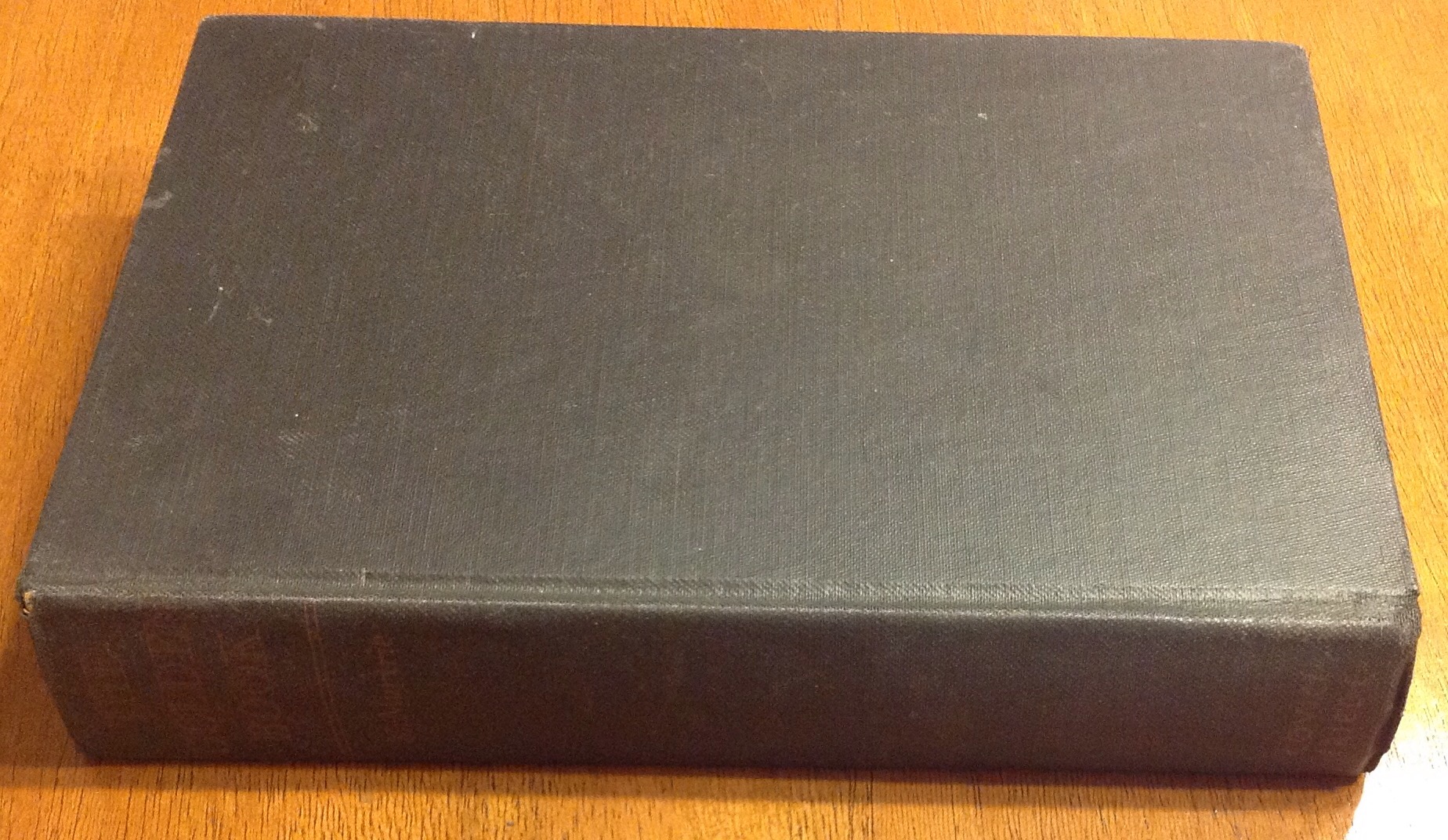
i picked up way, way too many books about books and I plan to put them in other book fiend’s, I mean Bibliophile’s’ and bookbinders’, hands. Here’s a handful with more below.


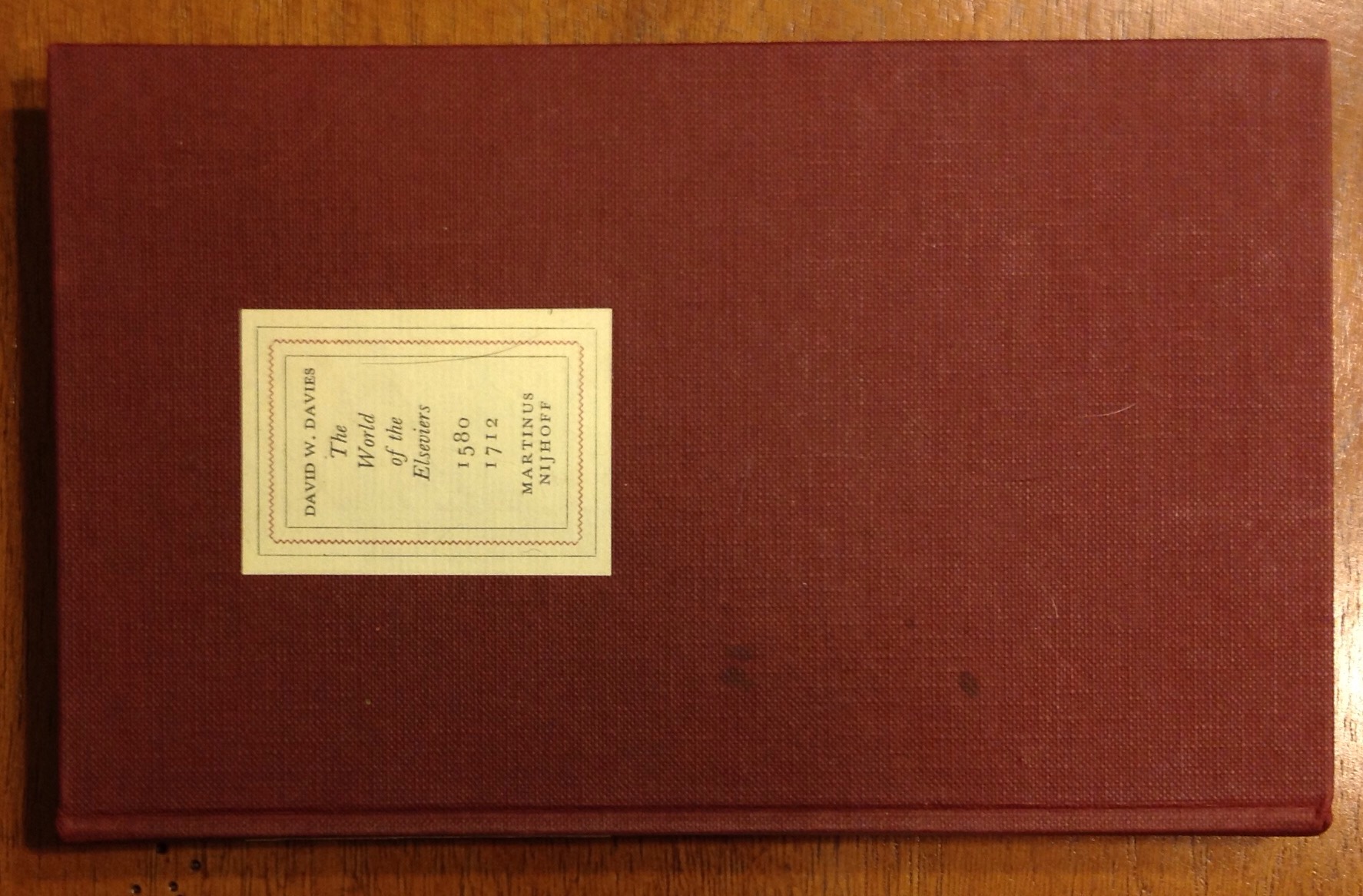
The World of the Elseviers 1580-1712, by Davies, 1954. Cloth hardcover. Nice copy. A history of the famous and sometimes infamous Dutch printing house and family. Fact, aspersions, admirations – a lot packed into a very small volume.


The Fortune Of Books – Essays, Memoirs and Prophecies of a Librarian, by Bay, 1941. Cloth hardcover, weak inner joint at front, but such nice paper. Why can’t we get that paper any more? Collection of talks and papers by Christian Bay. Main headings: Bookmen and Scientists, Library Life, Books and Literary Events, Time and Chance, Americana. It’s like having a tour guide to the library of the past with well curated selections from books, from historical events, from biographical themes. Something for everyone.


The Kingdom of Books, by Orcutt, 1927. Lovely gold stamping on brown cloth hardcover. Small bookbinder’s ticket front cover, pencil notation reads “colored fronts missing” but otherwise seems in excellent shape for a book this old. This is Orcutt’s travel guide to the kingdom of books, and it does not disappoint. Subjects include printers, binders, techniques, shopping for books in Paris, photos of lovely fine bindings, drawings of work spaces, examples of type, ornament, and illustration…I could go on, and so can he.

 The Magic of the Book by Orcutt, 1930. Ex library copy, with markings and missing fly leafs, beautiful gold stamping on brown cloth and a proper companion piece to the volume above. Does have the color frontispiece. Contains further stories and reminiscences of the author who loved to talk to people who loved books. And I love reading about it.


Yet more books about books. Can you blow your Horn book?

 
History of the Horn Book, by Tuer, 1979, reprint of the 1897 original. Cloth hardcover with dust jacket. Bookplate but otherwise most decent. Originally a horn book was a printed sheet affixed to a wooden back and covered with a thin sheet of horn – thin enough to read through – which protected the page from the Grubby and Destructive hands of Children. With time, many began to refer to any child’s ABC book or primer as a horn book. Once there were millions of the genuine article, horn and all, but now they are scarce. The passenger pigeon of books?  If they were so rare in 1897, what are they now? Have more been discovered? The author of this book knew of so few copies that each almost has its own biography. Just the kind of specialized, obscure reference book that so delights.

  
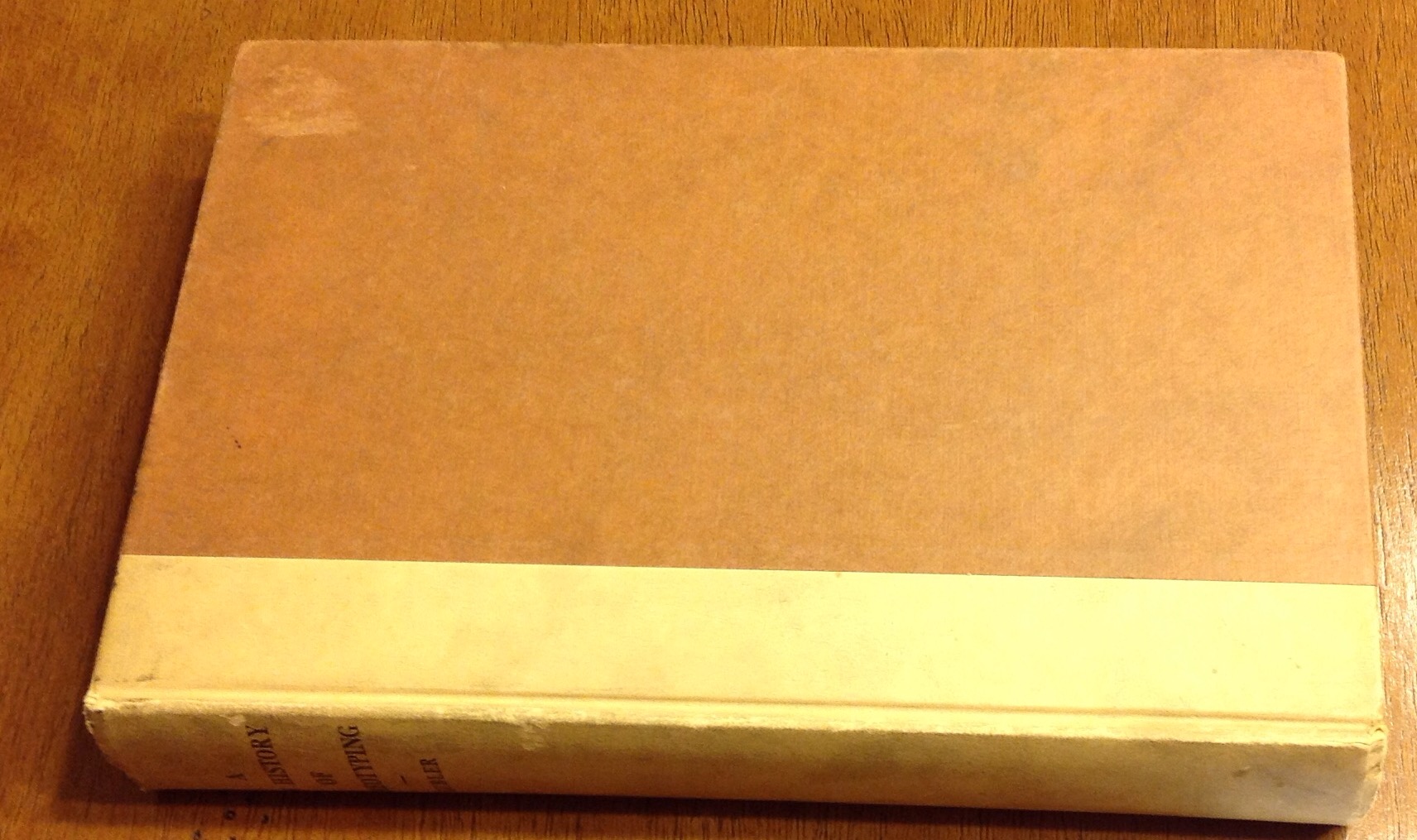
A New History Of Stereotyping, Kubler, 1941. Hardcover. Another fairly comprehensive book about printing history. In good condition. A secret surprise inside: a loose sheet of blue paper on the letterhead of the Certidied Dry Mat Corporation in New York, which ends with “Please grant me the pleasure of accepting this volume, together with my heartiest good wishes. Yours respectfully, George Kubler” with what I assume is a printed signature. Lots of history, lots of photographs, lots of drawings. This book is notable for the amount of space and illustrations devoted to would-be replacements of stereotype machines which the author scornfully derides. Since many of these machines never made it into commercial use, they may not be as well documented in other History Of Stereotyping books I have seen. Entertaining! 

  
The Life Of The Book, by Lehmann–Haupt, 1957. Cloth hardcover with dust jacket. Nice condition. “How the book is written, published, printed, sold, and read.” Doesn’t seem to include “made into a cute end table by some yahoo with a glue gun.” Don’t get me started. I’m an old curmudgeon who likes books as books, and I hate to see pretty old books  made into handbags when they could have been in my library. Wait, I have too many books already. Well, après moi le deluge, right? This small book is a gem. Some history and some advice on getting published and on collecting. I can’t let this go without a lengthy but marvelous quotation. ” The interesting and important thing about the public library in America is that it offers free reading facilities and a great number of varied services to every member of the community, young or old, rich or poor, regardless of race, color, or creed. Its doors are open to the highly educated as well as to the average reader, to the citizen and the immigrant, to persons in search of practical or special information as well as to those who wish to broaden their education generally and enrich their minds. The public library is host to the person who wishes to while away an idle hour as well as to the professional author and the scholar. Every day many thousands of people in the United States use their public library without ever realizing how privileged they are in comparison with the citizens of many other countries.” Can I get an amen? Maybe I can’t let this one go…I owe all that I am to a library and to librarians and this little volume is a beautiful love poem to the book.Edit

 
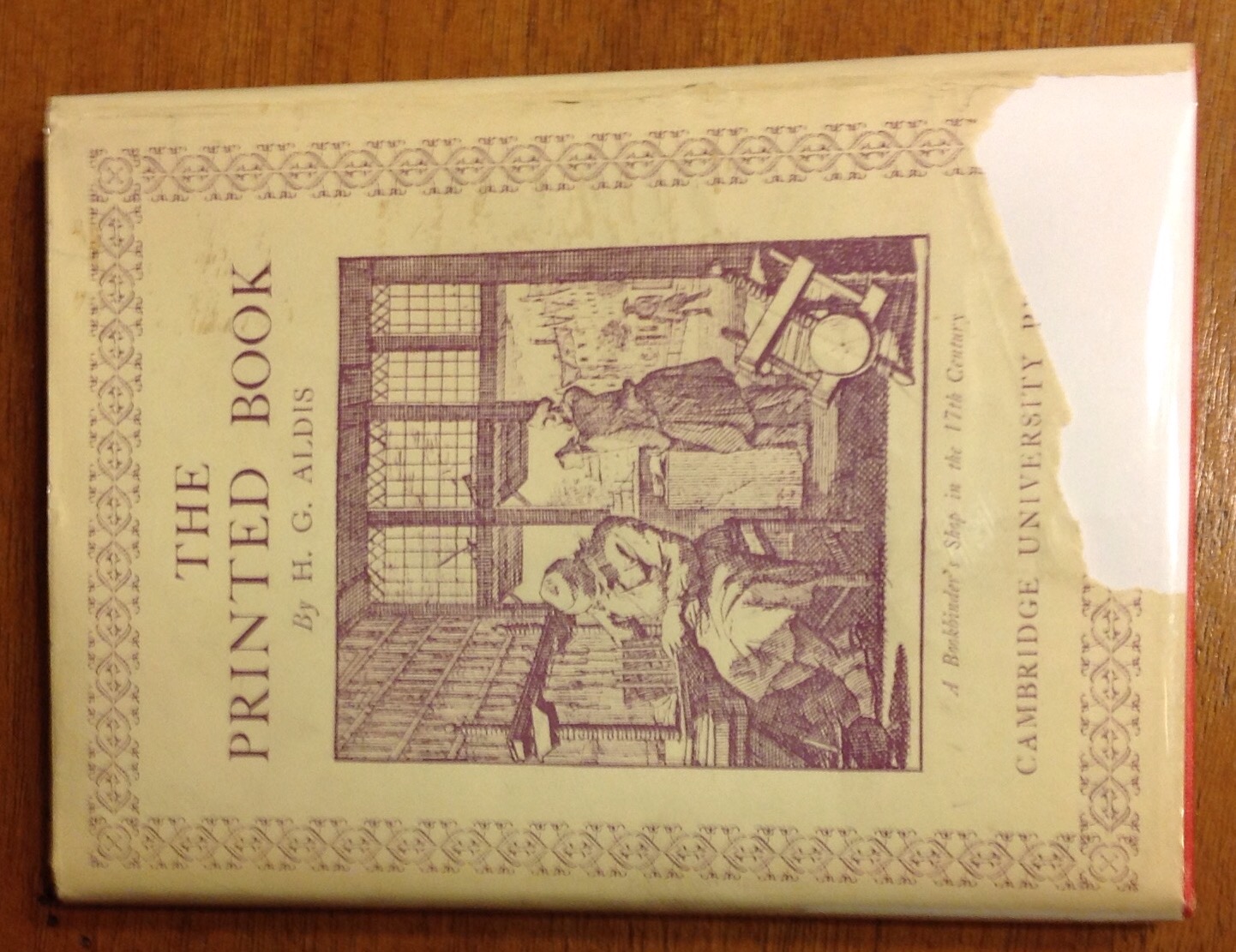
The Printed Book by H.G. Aldis, 1929. Small cloth hardcover with dust jacket. Bookplate, torn jacket. Lovely little thing with history, illustrations, and admonitions. Lots of pith in a small space.


The Art of The Book, by Ede, 1951. Cloth hardcover with dust jacket. “Fifty separate contributions by authorities from various countries …headings Type Design and Lettering, Printing the Text, Illustration and Graphic Reproduction (Including Dust Jackets), Commercial Binding, and Hand Binding.” Many great illustrations in a largish book, including whole page reproductions and gorgeous as-in-Gaw-Jess fine leather bindings. Like Itchikoo Park, it’s all too beautiful.


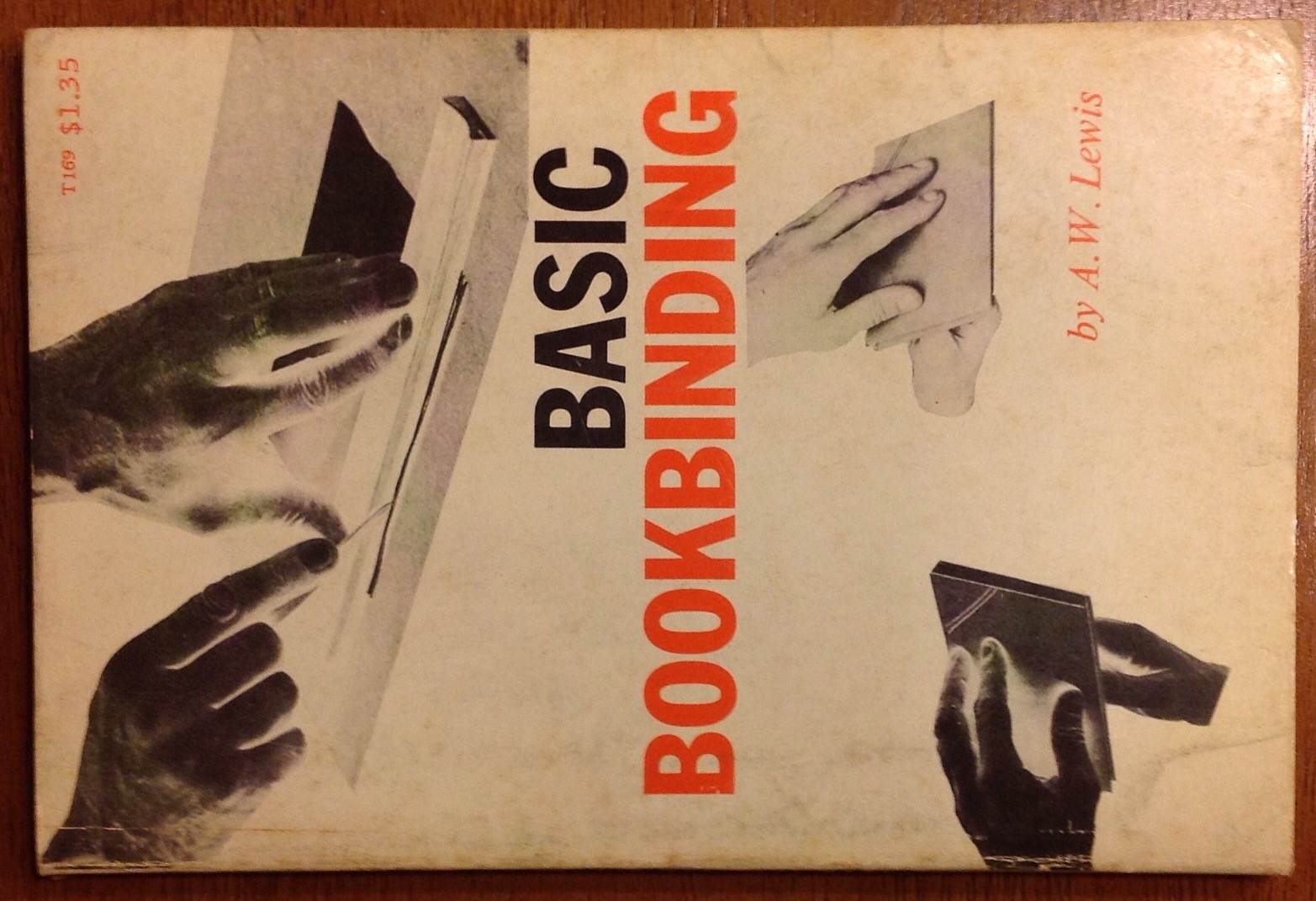
Basic Bookbinding, by Lewis, 1957. Sewn paperback binding. Surprisingly detailed descriptions and illustrations of tools and techniques for the novice, but even the experienced binder might learn something new. For me, it was the trick for positioning large pasted sheets exactly. If you have to start somewhere, you could do worse.  

Some more books about books. Mostly history of books and printing.


The Book, by Douglas McMurtrie, 1989. Hardcover with dust jacket, no markings, very nice. A history of bookmaking and printing. Starts way back in the dawn of literate time and works its way up into the present. THIS IS A BIG BOOK WITH NICE BIG PRINT. I mean, not huge, but you shouldn’t need the cheaters for this one. Lots of illustrations and informative digressions. Very complete, very well written, very useful.


Books and Their Makers in the Middle Ages, Putnam, 1896. Cloth hardcover, fading to cover but amazingly good for the age. Clean pages inside with a few pencil marks on the front flyleaf, but some dirt on the fore-edge deckle.  Very thorough treatment of what the title says. Not so much a how-to book as a how-it-was book and sometimes that’s what you need.


The Golden Book, Douglas McMurtrie, 1934. Pages slightly yellowed but not brittle or dirty. The origin of the alphabet! The invention of printing! A typographical messiah! Techniques and the art of bookmaking. Sorry, I’m getting punchy. It’s really quite the serious and detailed tome, full of nearly forgotten lore and a fascinating read.


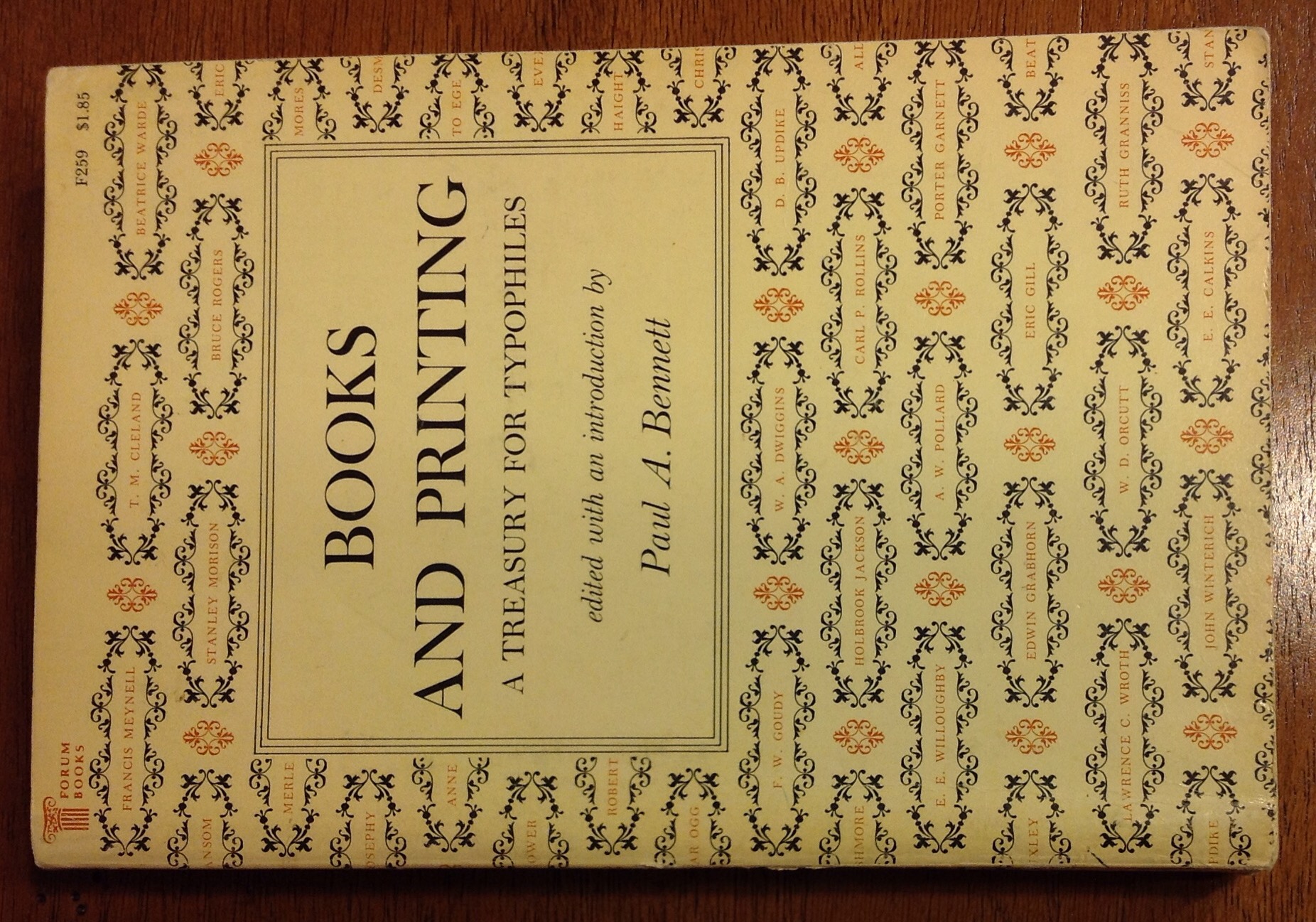
Books and Printing, a Treasury for Typophiles, by Bennett, 1963. Paperback, perfect bound. A collection of essays and articles about design, about type, about printing, about the reason for the curious arrangement of type trays…the variety of authors gives a refreshing variety to the reading, with more serious and scholarly articles alongside sea stories from grizzled printers and hand binders. There’s something for every print lover in this book.


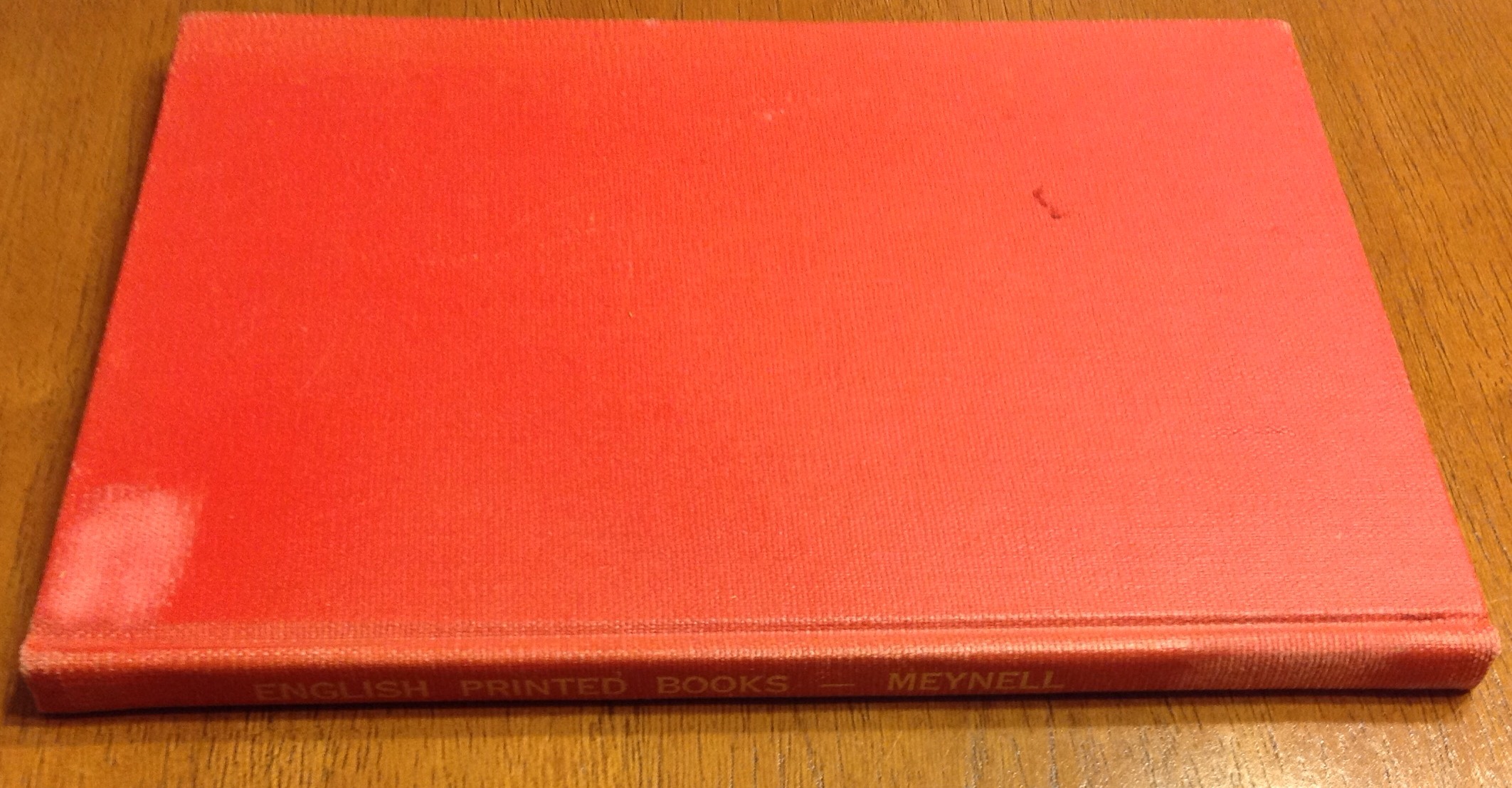
English Printed Books by Meynell, 1948. Cloth hardcover, ex library book. Not just books printed in English, this is mostly books printed in England. A slender, elegant volume packed full of color and b/w illustrations. Some history of printing, illustration, design, type…many subjects for a small book and absolutely fascinating.


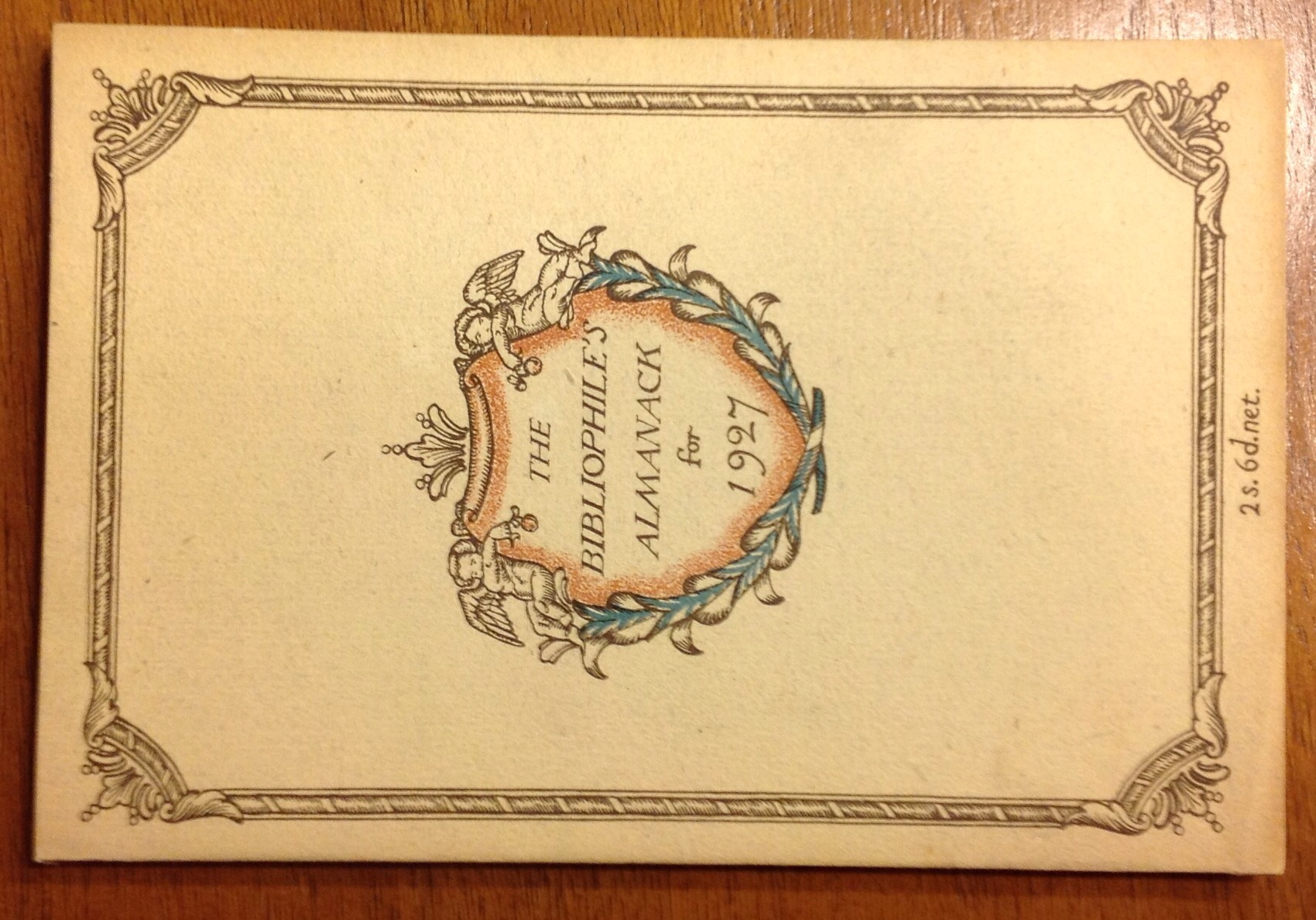
The Bibliophile’s Almanack for 1927, sewn paperback, Simon & Child, 1927. A small book that doesn’t look its age.  Starts with a 1927 calendar, essays, book reviews, artwork, lots of tidbits for book lovers. Sample? OK. ” …the perils of the young bibliophile are numerous: they lurk in the bookseller’s pleasant groves as well as on the street which is called Farringdon, and as tempting drabs in the Caladonian Market. Yes, my elderly aunt would have been relieved ….that her nephew had at least fallen in love with a minor classic when he might have formed an unfavourable attachment for an early Bradshaw, become ensnared with the less desirable of the Erotica, or, more romantically, conceived a passion for some unattainable scion of the Incubabula.” Its like “as the page turns” or “all my volumes” – a bookbinding soap opera. Health life in the library. In my secret heart I, too, burn for the unattainable Incunabulus …

Some books about paper. 


Practical Paper-Making by Clapperton, 1894. Cloth hardcover in great shape for an old book. The front flyleaf seems to have become stuck down to the pastedown, and I didn’t try to lift it. Loose tipped-in frontispiece, glue seems failing on the spine so signatures aren’t tightly bound with adhesive although sewing seems good. Read about how they used to make the good paper you can’t find in books anymore, as well as the bad paper. Intended for the commercial paper maker, but the artisan maker will learn neat tricks like keeping the dandy free of bells when making laid papers at a quick speed, how to coat one’s chest with cement, and how to properly work the soft greasy stuff. I fear I am being frivolous about what is clearly a valuable reference volume for understanding the nature of the vintage paper one encounters in the course of restoring, or reading, old books and works on paper. Paper rules!


The Rittenhouse Mill and the Beginnings of Papermaking in America by Green, 1990. Single section paper covered pamphlet. The first paper mill in British North America was built in 1691 by William Rittenhouse and William Bradford and the Rittenhouse family paper makers were the only paper makers in America for decades. The site of this mill is now a park, and its history is very well documented, unlike much of the early printing history of this country. Sadly, when the Rittenhouse family donated this historic property to the local Park Commision, the Commision preserved some of the old houses in the town but tore down the mills. Today only traces remain of these historic mills, but in this book you can read about the mill and the techniques and see the last known photo. Very interesting little book.


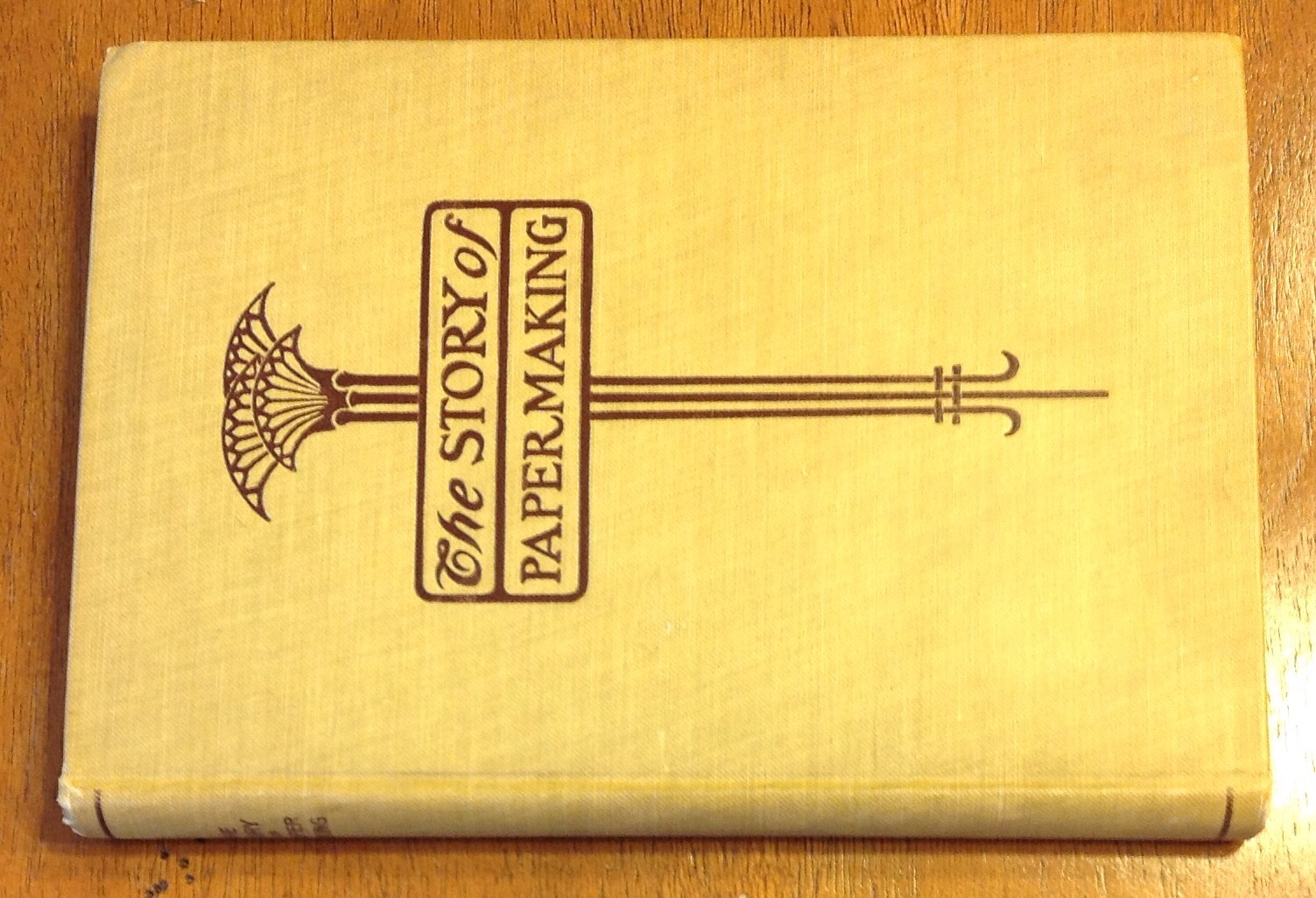
the Story of Papermaking An Account of Paper-Making from Its Earliest Known Record Down to The Present Time,  J.W.Butler Paper Company, 1901. Cloth hardcover, paper is clean and lovely. I like the photograph of the women in long dresses and bonnets sorting and shredding barrels of fabric – it must have been cold in the room. No, it turns out that the process was considered to be “the most disagreeable and unwholesome of any in the entire process … Filth, dust and dirt … The women must wear bonnets or hoods for the protection of the hair.” Beautifully laid out with wide margins matching the center gutter.  The front pastedowns is inscribed “Please return to Strathmore Paper Company, Mittineague, Mass.” Don’t do it.


The Complete Book Of Hand Crafted Paper, Kern, 1980. Hardcover with dust jacket. Starts with an overview of past and present paper knowledge and then teaches you to make paper in the kitchen. Simple tools, instructions for making various types of moulds, sources for materials, decorating techniques…a wide ranging book and a great way to jump into the Papermaking vat, er, pool.

Some older books about books


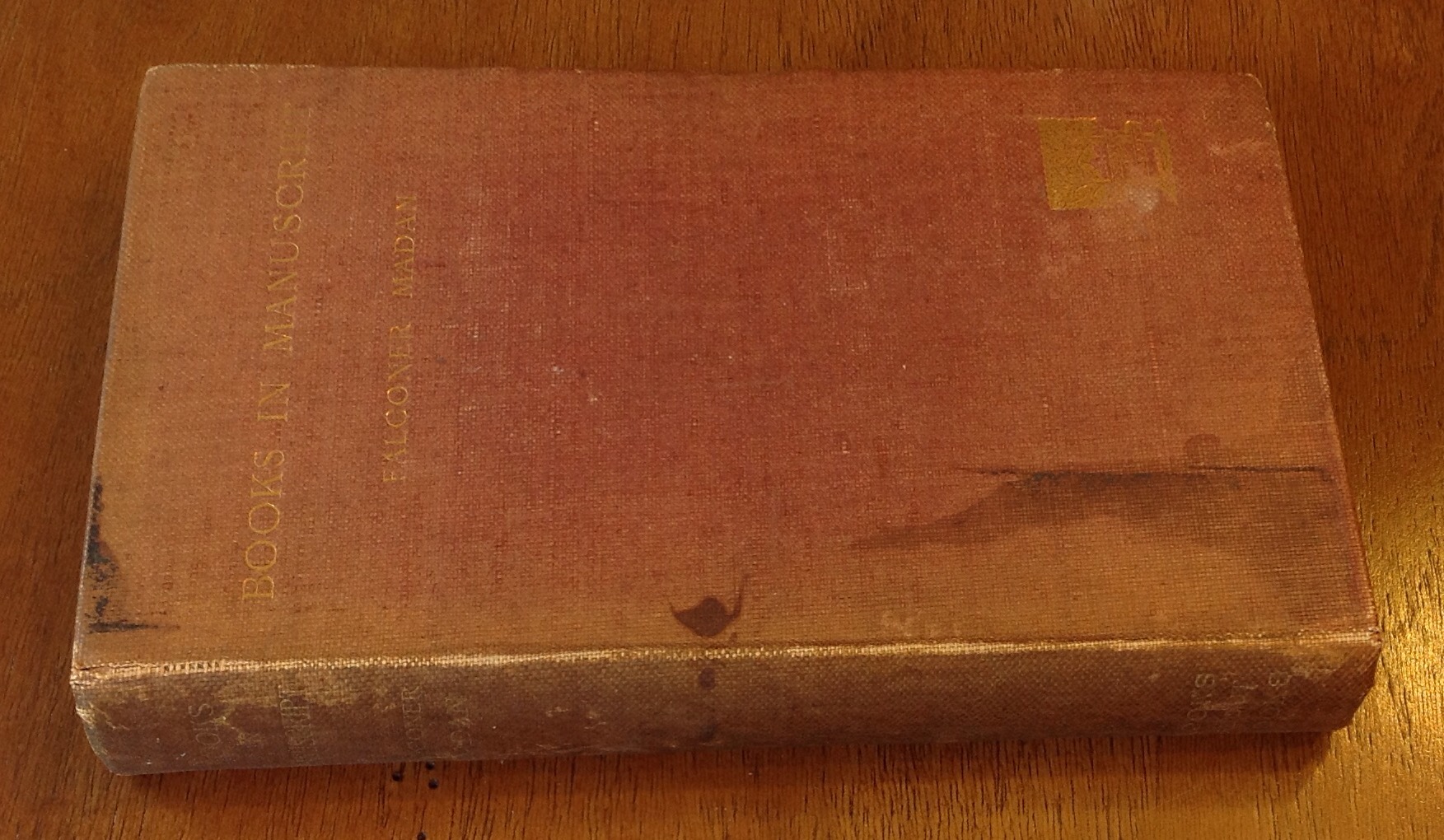
Books In Manuscript, by Falconer Madan, 1893. Cloth hardcover. I love the “Arbor Scientia / Arbor Vitae” logo with the entwined trees on the cover. Other than a small oval Joseph McDonough Bookseller Albany NY  sticker, nice clean pages throughout. Wait, there’s also a W.H. Clarke booksellers sticker on the back flyleaf. Deckle edges all around and the edges are dirty on top. This has been on a shelf for a long, long time. And yet the paper is as strong and flexible as any new paper – better, really. Who can afford to print entire books on such high-quality paper anymore? Frontispiece is loose, guard tissue has darkened and transferred some color on to the title page. This book is about how to study handle and catalog documents in manuscript form. Here is a wonderful excerpt: “And once more, modern readers who are accustomed to skim the Times every morning and a novel every week, when set down before some important historical work, feel that their minds are is it were unstrung and incapable of close attention and sustained effort. They are tempted to glance superficially through volumes which ought to be impressed on the mind, and profit little by the process. For these and such the the study of an original document in the manuscript, a court-roll, a charter, a page of a chronicle, an old political poem, is the one corrective which suits the disease, – a bracing, invigorating, and it may be added, and attractive exercise, the contact of Antaeus with his mother earth.” Woot! Today you can’t get the young whippersnappers to stop instagramming and snapchatting long enough to skim an entire novel every week, can you? If you are of the intellectual bent and mental strength to work with old manuscripts, you will love this book. Edit


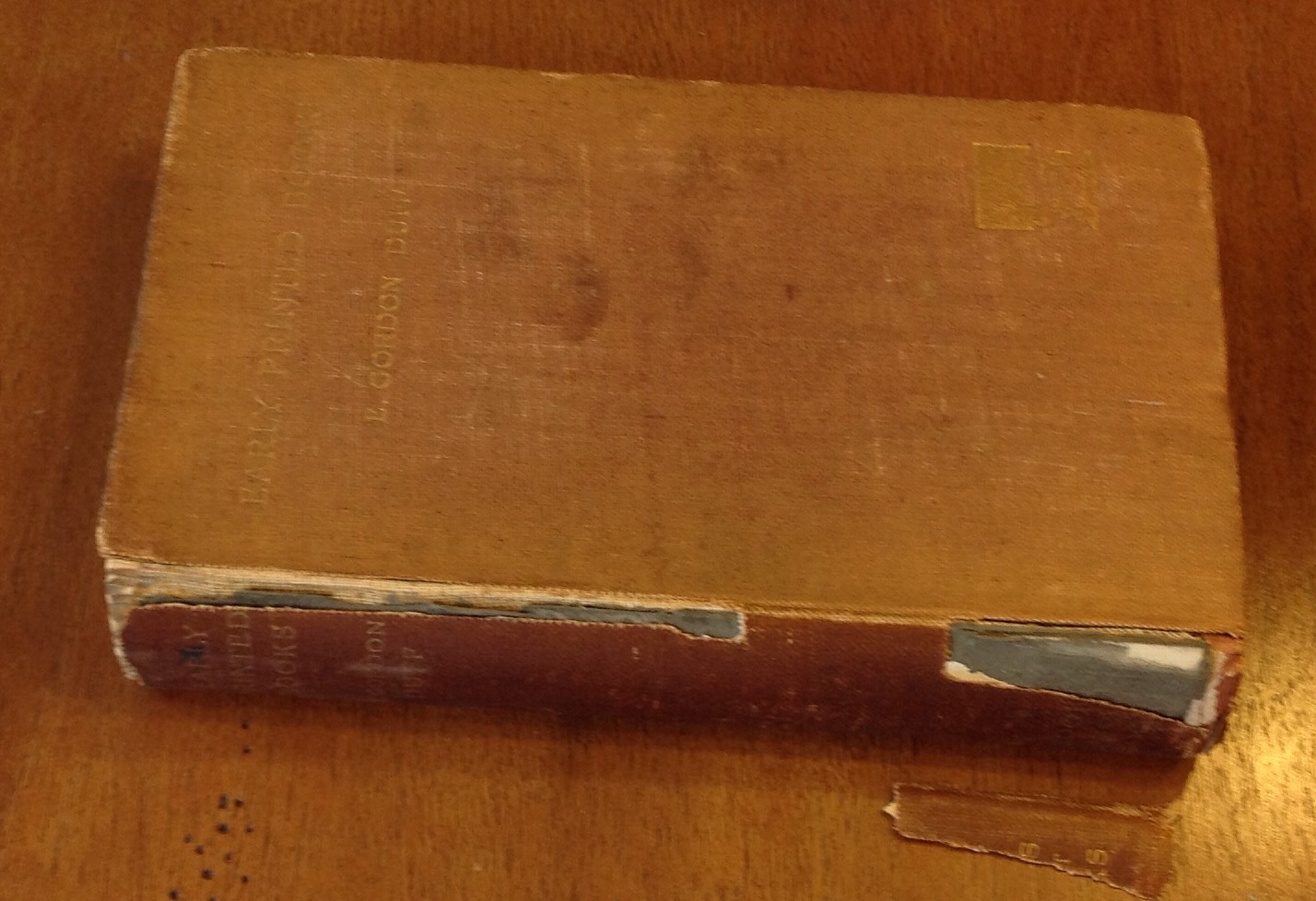
Early Printed Books, By E. Gordon Duff, 1893. Companion in the same series as the volume above, with more damage to the spine, a bookplate from the Southworth Press and a 1911 inscribed name. Same deckle edges, dirty top edge, stained guard tissue, wonderful old paper. Being a history of the  introduction of printing into various places in Europe, with some marvelous samples of early printing in color reproduction. Would this be a beautiful candidate for rebinding or rebacking? Yes. Yes, it would.


A Magnificent Farce and Other Diversions Of A Book-Collector, Newton, 1921. Gorgeous fine old paper, two deckle edges and the top gilt. Cloth  and paper hardcover. Color frontispiece, many black and white illustrations throughout. I really can’t say what this book is about. The author does indeed get around to talking about books, but there are tons of personal reminisces and stories, most of which have at least some tangential connection to books. An interesting read, it really is. Kind of a Victorian Dave Barry …


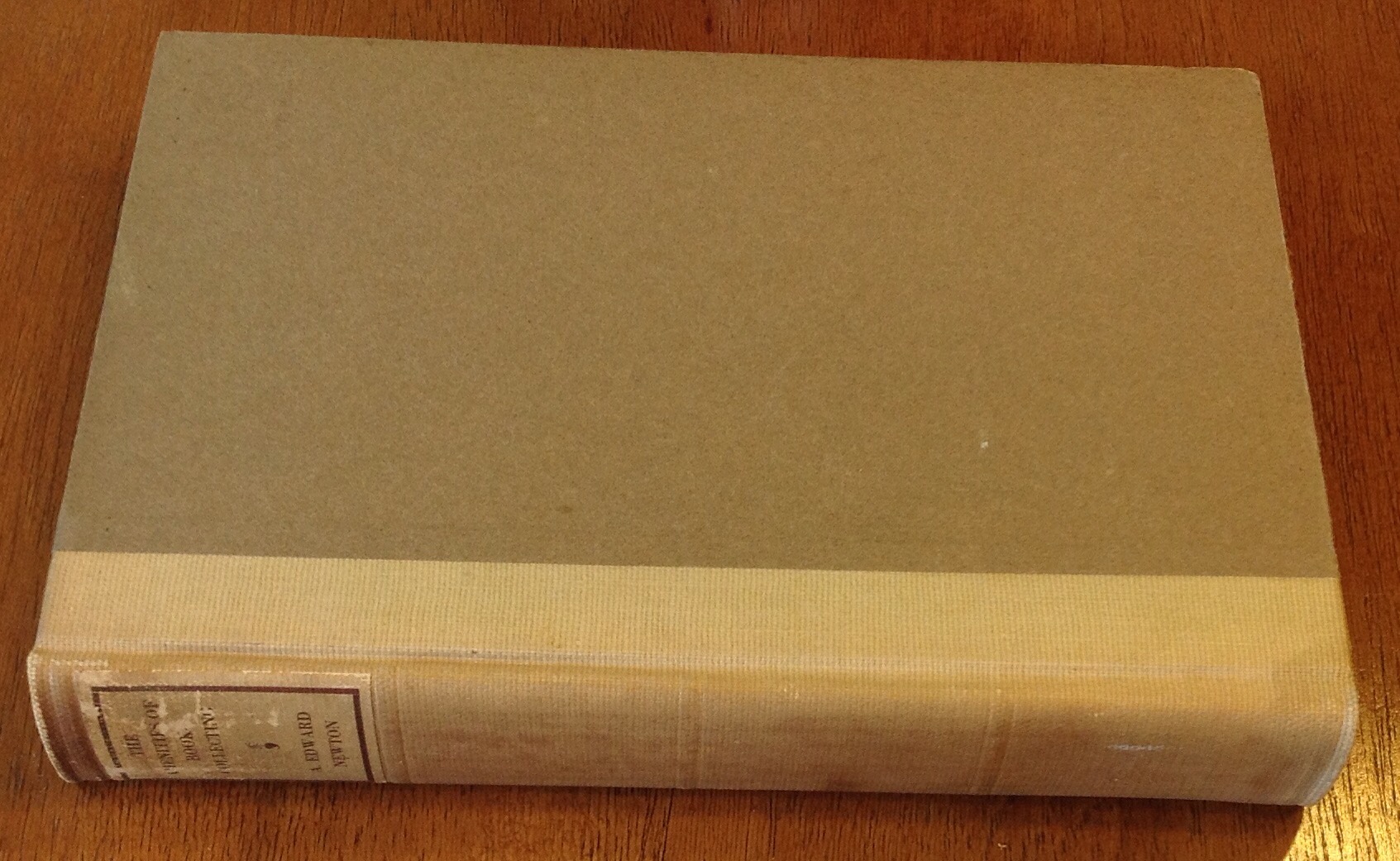
The Amenities Of Book Collecting and Kindred Affections, 1924, Newton. Paper and cloth hardcover. Paper label is a bit worn, name inscribed in front,otherwise seems clean and unmarked. Gilt top edge. The author writes about book collecting and you will be jealous when he claims his copy of “Endymion” was worth the $360 he paid for it because it was once Wordsworth’s and had his name on the title page. Sample: “I have a fondness for college professors. I must have inherited it from a rich old uncle, from whom I unluckily inherited nothing else, who had a similar weakness for preachers. ” He has a long winded way of talking which is utterly addicting once you fall into the rythym of it. It needs reading, but be warned: you will be jealous.


An Introduction to Bibliography, McKerrow, 1928. Blue cloth hardcover, cover shows wear but other than a pencil inscription on the flyleaf  very clean.  Another of these scholarly British works covering a brief history of bookbinding, techniques, explains basic terms such as catchwords, signatures, paper sizes, laid vs. wove,etc., all with a view toward teaching you to how to interpret a book by knowing what to look for. Kind of like a Gray’s Anatomy for the forensic book detective. I already have a copy of this instructive volume or I wouldn’t let it go.